
Chicken is one of the most popular sources of protein in Indian households. Whether you’re buying chicken breast, boneless chicken, drumsticks, wings or a whole chicken, knowing how to identify fresh chicken is important for both taste and food safety.
The good news is that there are several things you can check before cooking: smell, colour, texture, packaging, storage conditions and expiry dates.
Here’s a simple guide to help you identify fresh and spoiled chicken.
1. Check the Smell and Colour
One of the easiest ways to identify spoiled chicken is its smell.
- Fresh chicken
- Fresh raw chicken should have little to no noticeable odour.
- It may have a very mild natural smell, but it should not smell unpleasant.
- Spoiled chicken
- A strong unpleasant smell
- Sour or acidic odour
- Sulphur-like or rotten smell
- Ammonia-like smell
- If the chicken has a strong unpleasant smell, do not cook or taste it to see whether it is safe. It is better to discard it.
Look at the Colour
Colour can provide useful clues, although it should not be the only factor you consider.
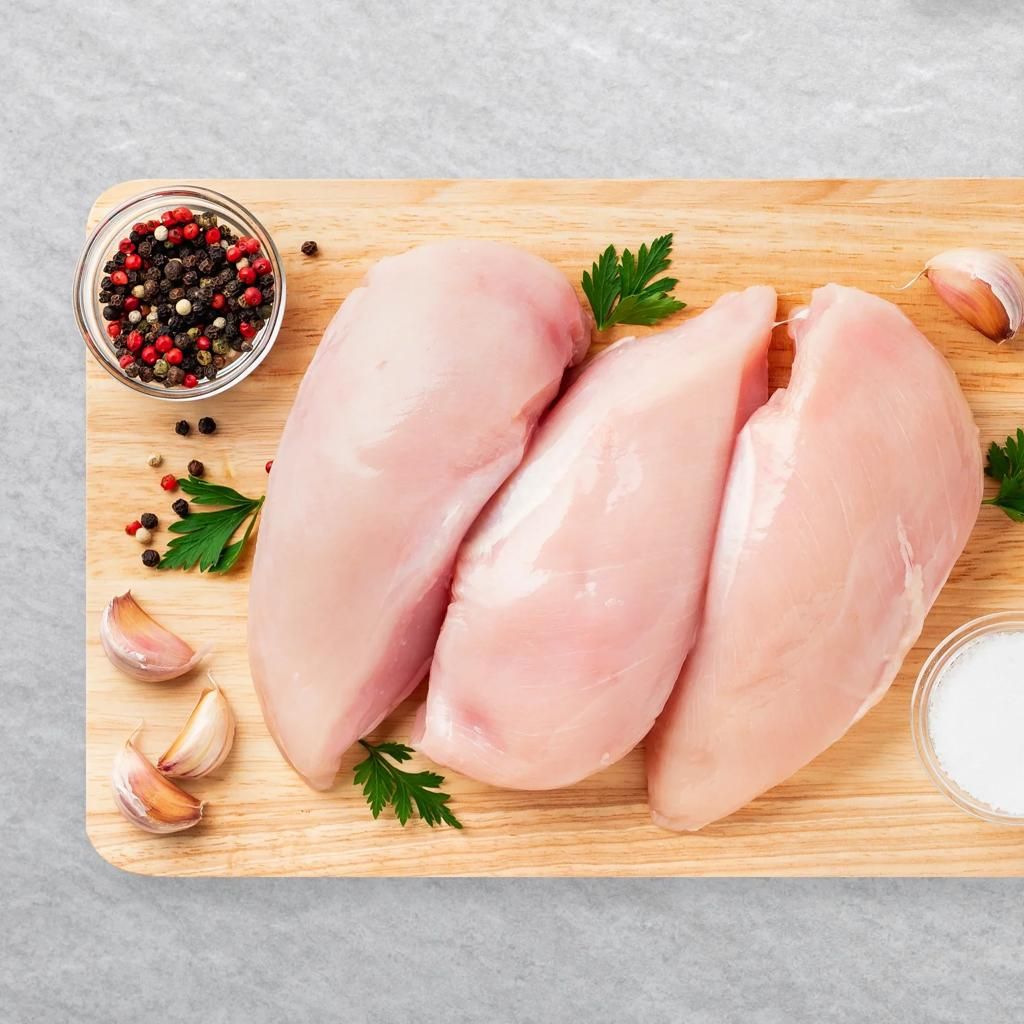
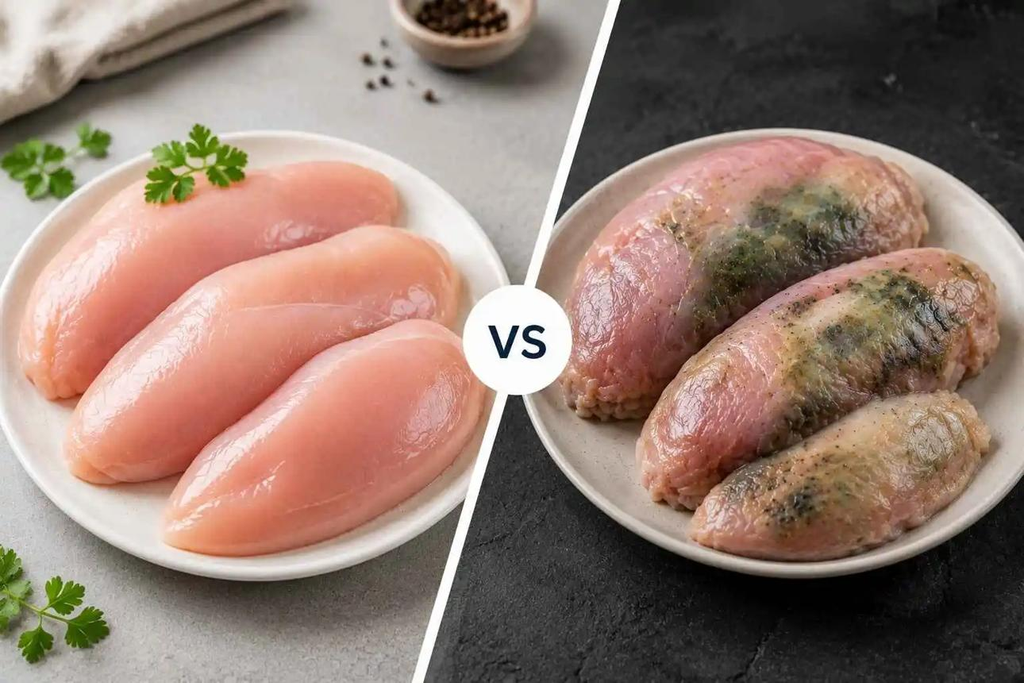
Fresh raw chicken is generally pale pink to pinkish, depending on the cut and how it has been stored.
You may also notice slightly darker areas around certain parts of the chicken. This does not necessarily mean the chicken is spoiled.
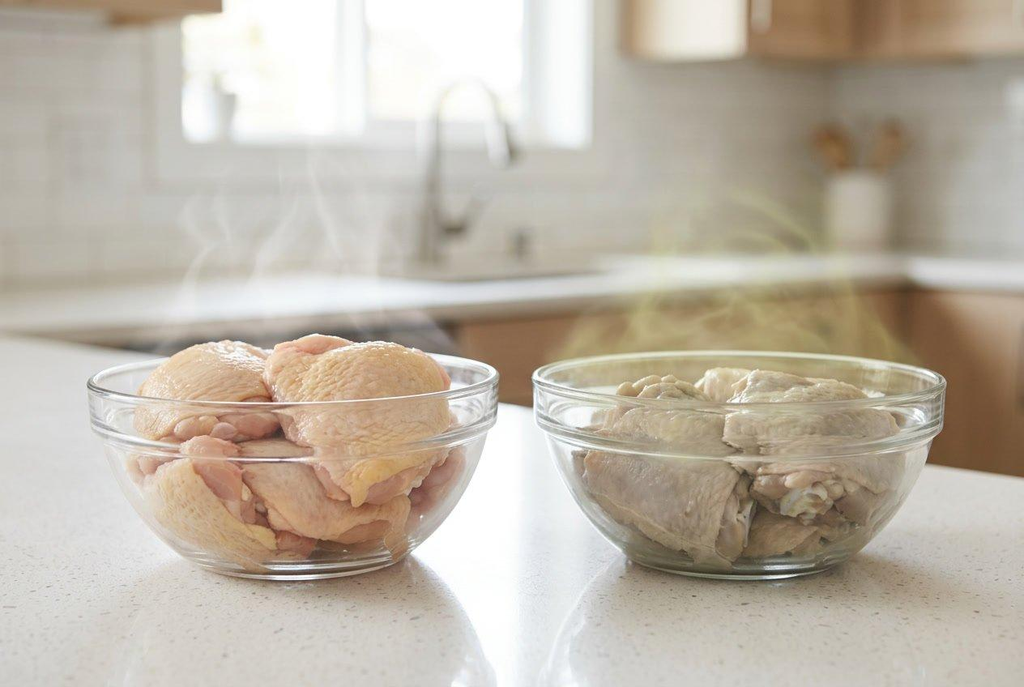
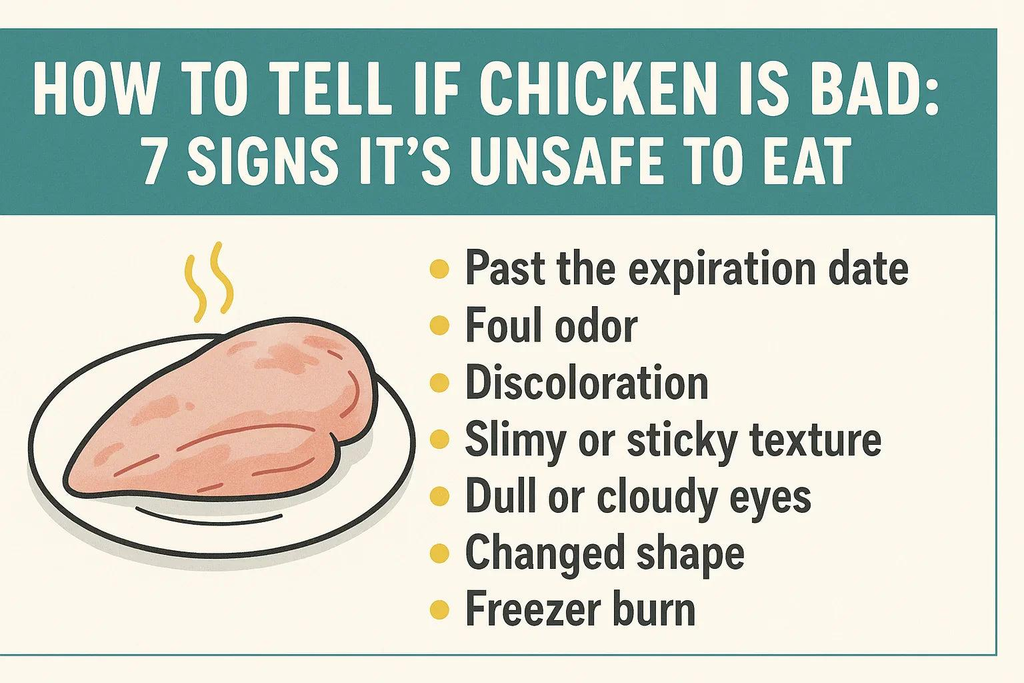
Signs that may indicate spoilage
Be cautious if the chicken develops:
- Greyish or greenish colour
- Unusual dark discolouration
- Significant colour changes accompanied by an unpleasant smell
- Mould-like growth
However, remember that colour alone cannot reliably determine whether chicken is safe to eat.
For example, chicken can sometimes look slightly darker because of exposure to air or changes during refrigeration.
3. Check the Texture
Fresh chicken should feel firm and moist, but it should not feel excessively sticky or slimy.
When you handle properly refrigerated fresh chicken, a small amount of moisture is normal.
Be careful if the chicken feels:
- Extremely slimy
- Sticky or tacky
- Abnormally soft
- Coated with a thick, unpleasant film
A slimy texture combined with an unpleasant smell or unusual colour is a strong warning sign.
If you’re unsure, don’t take the risk.
4. Check the Packaging
If you’re purchasing packaged chicken, examine the packaging carefully.
Look for:
- Properly sealed packaging
- No leaks
- No unusual swelling
- No damaged or broken seals
- A valid use-by or expiry date
- Proper storage instructions
If the packaging is swollen or leaking, the product should be treated cautiously.
For fresh chicken purchased from a shop, make sure the chicken is handled hygienically and kept properly chilled.
5. Check How the Chicken Was Stored
Storage is just as important as appearance.
Raw chicken is highly perishable and should be kept refrigerated.
If chicken has been left at room temperature for an extended period, it can become unsafe even if it still looks and smells normal.
This is an important point:
You cannot always tell whether chicken is safe simply by looking at it.
Harmful bacteria can multiply without producing obvious changes in smell, colour or appearance.
That’s why proper refrigeration and safe food handling are essential.
6. Don’t Rely Only on the Expiry Date
The date on the package is useful, but it isn’t the only thing to consider.
A chicken product can become unsafe if it has been improperly stored before the date printed on the package.
Similarly, changes in colour or texture don’t automatically mean that chicken is spoiled.
Use the date together with:
- Storage conditions
- Packaging condition
- Smell
- Appearance
- Texture
When in doubt, throw it out.
7. Fresh Chicken vs Spoiled Chicken
Here’s a quick comparison:
| Check | Fresh Chicken | Potentially Spoiled Chicken |
|---|---|---|
| Smell | Mild or almost no smell | Strong, sour or unpleasant smell |
| Colour | Pale pink/pinkish | Grey, greenish or unusual discolouration |
| Texture | Firm and moist | Very sticky or slimy |
| Packaging | Intact and properly sealed | Leaking, damaged or swollen |
| Storage | Properly refrigerated | Left warm for extended periods |
| Appearance | Normal | Mould or unusual growth |
Remember that these signs are indicators, not a guarantee of safety. Harmful bacteria may be present without obvious changes.
8. What About a Slight Smell After Opening the Pack?
Sometimes packaged chicken can have a temporary smell immediately after opening.
This can happen because the chicken has been enclosed in packaging.
If the smell disappears quickly after opening and the chicken otherwise appears normal and has been properly refrigerated, the initial odour may not necessarily mean spoilage.
However, if the unpleasant smell persists, especially when combined with sliminess or abnormal colour, don’t consume the chicken.
9. Should You Wash Chicken Before Cooking?
A common practice in Indian kitchens is washing raw chicken before cooking.
However, washing raw chicken can splash bacteria onto sinks, countertops, utensils and other foods.
Instead of washing chicken, focus on:
- Keeping raw chicken separate from other foods
- Using a separate cutting board where possible
- Washing hands thoroughly after handling raw chicken
- Cleaning utensils and surfaces properly
- Cooking chicken thoroughly
Proper cooking is an important step in reducing the risk from harmful bacteria.
10. What Should You Do If You Think Chicken Has Spoiled?
If you suspect that chicken has spoiled, don’t taste it to check.
Don’t try to rescue it by:
- Washing it
- Adding spices or marinades
- Freezing it again
- Cooking it for longer
- Mixing it with fresh chicken
The safest option is to discard it.
Also clean any surfaces, utensils or containers that came into contact with the raw chicken.
11. How to Keep Chicken Fresh for Longer
Good storage starts as soon as you bring chicken home.
Follow these simple practices:
Keep it cold: Refrigerate raw chicken promptly.
Use it within the recommended storage period: Don’t keep raw chicken refrigerated indefinitely.
Freeze it if you won’t use it soon: If you don’t plan to cook the chicken within the recommended refrigerated storage period, freezing is a safer option.
Avoid repeated temperature changes: Don’t repeatedly take chicken out of the refrigerator and leave it at room temperature.
Prevent cross-contamination: Keep raw chicken away from cooked food, vegetables and ready-to-eat foods.
Thaw safely: Thaw chicken in the refrigerator or using another food-safe method rather than leaving it sitting at room temperature.
12. Fresh Chicken Should Also Be Handled Properly
Buying fresh chicken is only one part of food safety.
From the chicken shop to your refrigerator and finally your kitchen, maintaining the cold chain and practising good hygiene are equally important.
When purchasing chicken, choose a seller who:
- Maintains proper refrigeration
- Handles chicken hygienically
- Uses clean equipment
- Separates raw products appropriately
- Packs chicken properly
- Delivers it in suitable conditions
Frequently Asked Questions
How can I tell if raw chicken is spoiled?
Look for a combination of warning signs such as a strong unpleasant smell, unusual colour and an excessively slimy or sticky texture. Also consider how the chicken was stored.
Is chicken bad if it smells slightly?
Not necessarily. A brief odour immediately after opening packaged chicken may occur. However, a strong or persistent unpleasant smell is a reason not to consume it.
Can fresh chicken have a little liquid in the package?
Yes. Raw chicken naturally contains moisture, and some liquid in the packaging can be normal. Excessive leakage or damaged packaging, however, should be treated as a warning sign.
Can you eat chicken that has changed colour?
A colour change alone does not always mean chicken is spoiled. However, if unusual colour is accompanied by a bad smell, sliminess or improper storage, it is safer to discard it.
Does cooking spoiled chicken make it safe?
No. You should not rely on cooking to make spoiled chicken safe.
Should raw chicken be washed?
Washing raw chicken isn’t necessary and can spread bacteria around the kitchen through splashing. Good hand hygiene, surface cleaning and thorough cooking are safer practices.
Final Takeaway
Knowing how to identify potentially spoiled chicken can help you make safer choices in the kitchen.
Before cooking chicken, check the smell, appearance, texture, packaging and storage history. Most importantly, don’t rely on appearance alone because harmful bacteria may not cause obvious changes.
If chicken has a strong unpleasant smell, an unusual appearance, a very slimy texture, damaged packaging or has been stored improperly, don’t take the risk—discard it.
And when buying chicken, choose a reliable seller who maintains good hygiene and proper refrigeration from the shop to your home.
Fresh chicken starts with responsible sourcing, proper handling and safe storage.